Frequently asked questions
Causes and factors that affect fertility

When pregnancy takes time to arrive
IT AFFECTS 1 in 6 couples at some point in their reproductive life
The causes of infertility can be many, and can originate in the woman, the man, or both. Infertility is a common problem, affecting 1 in 6 couples. It’s diagnosed when a couple hasn’t achieved pregnancy after a year of regular intercourse aimed at conceiving.
The chance of spontaneous pregnancy is around 15–25% a month, depending on the woman’s age. This probability is stable for the first 6 months and then gradually declines. After a year, the monthly chance of pregnancy is 5–10%, and under 3% after 2 years.
Besides age, other factors can affect a couple’s fertility. The most common are polycystic ovaries, endometriosis, and recurrent miscarriage; but the influence of other factors — being overweight, alcohol, or smoking — shouldn’t be overlooked either. Genetic or family-related issues, such as early menopause in the mother, can also affect a woman’s fertility.
How does age affect fertility?
The chance of spontaneous pregnancy is around 15–25% a month, depending on the woman’s age. This probability is stable for the first 6 months and then gradually declines. After a year, the monthly chance of pregnancy is 5–10%, and under 3% after 2 years.
Besides age, other factors can affect a couple’s fertility. The most common are polycystic ovaries, endometriosis, and recurrent miscarriage; but the influence of other factors — being overweight, alcohol, or smoking — shouldn’t be overlooked either. Genetic or family-related issues, such as early menopause in the mother, can also affect a woman’s fertility.
What is endometriosis?
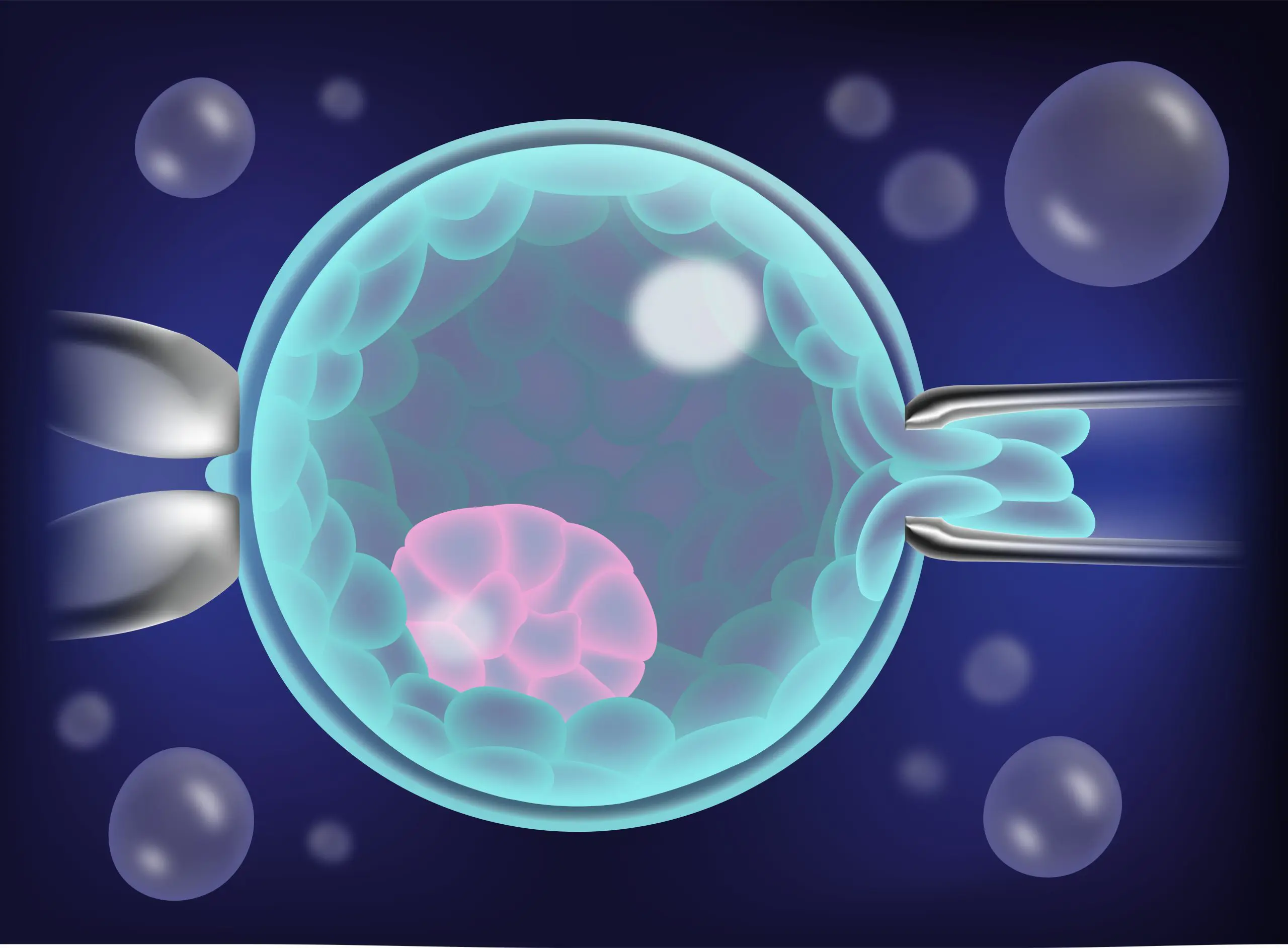
Endometriosis is the presence of endometrial tissue (the lining of the uterus) outside the uterine cavity. It usually appears on the ovaries, behind the uterus, in the bladder or in the bowel. It’s present in 25–50% of women with fertility problems and is associated with pelvic pain during periods. The most commonly recommended fertility treatment is in vitro fertilisation.
What are polycystic ovaries?
Polycystic ovaries come with a hormonal disorder that affects roughly 5–10% of women of reproductive age. The most common symptoms are missing or irregular periods, lack of ovulation, and acne or hirsutism (excess body hair) due to excess male hormones. Ovarian stimulation is the recommended treatment.

What is ovarian failure or low egg reserve?
Ovarian failure is a condition in which the number or quality of the eggs in the ovaries is reduced. It’s frequently diagnosed from age 38 onward and in women whose mothers went through menopause before age 45. Recommended treatments include in vitro fertilisation, if trying for pregnancy with one’s own eggs, or egg donation, if ovarian failure prevents using one’s own eggs.
What is male infertility?
Male infertility refers to a reduced number, motility or quality of sperm. It usually has no symptoms, though it can sometimes follow a history of genitourinary problems or be linked to certain lifestyle habits. The recommended treatment may be artificial insemination, for a mild male factor, or in vitro fertilisation with ICSI, for a severe one.