The earliest genetic diagnosis available
Preimplantation Genetic Diagnosis (PGD) is the earliest diagnostic technique available, allowing the detection of genetic and chromosomal abnormalities in the embryo before it’s transferred to the mother’s uterus. Its goal is to help ensure healthy offspring, avoid passing on a specific condition, and reduce the risk of miscarriage.
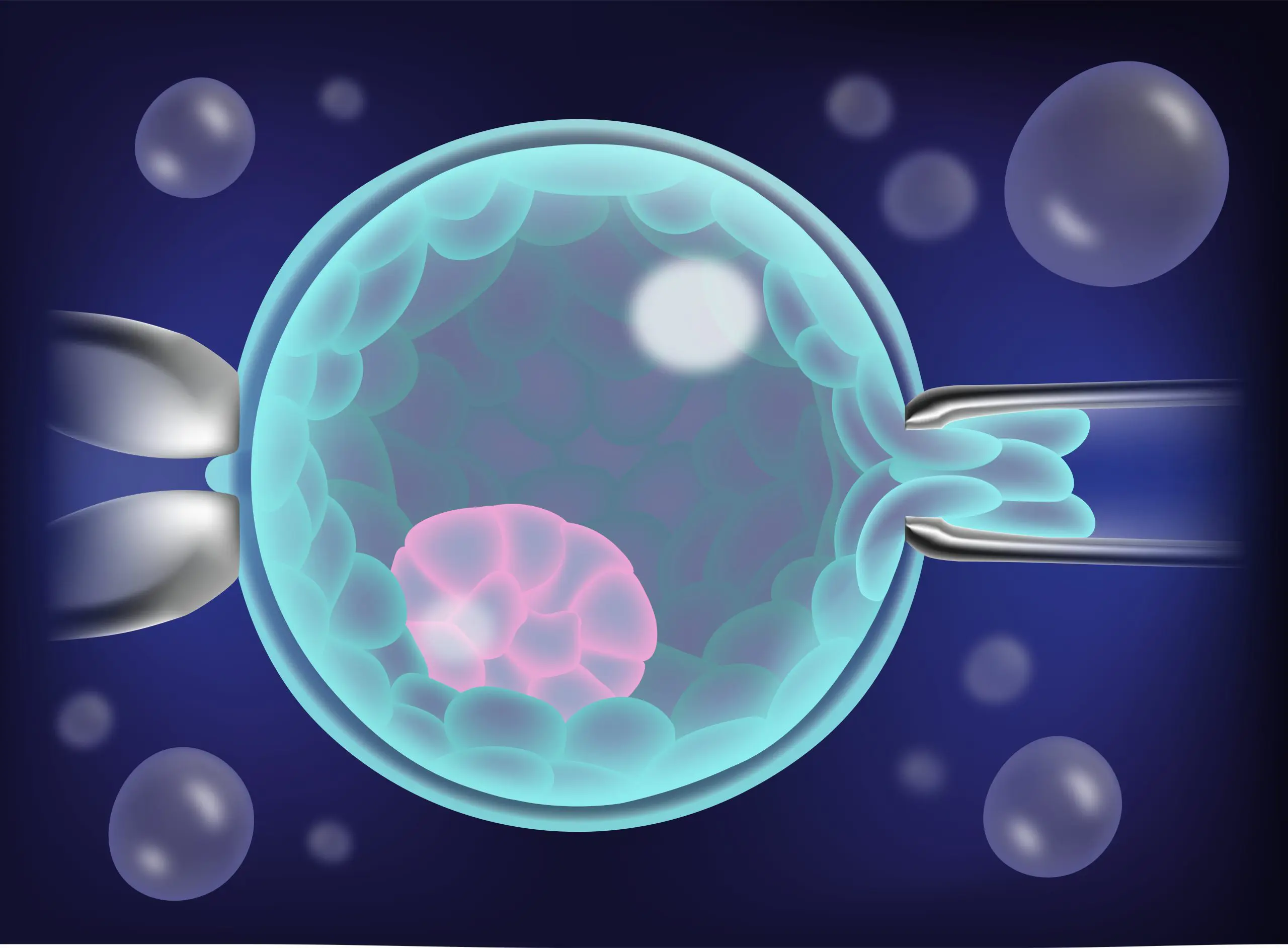
Preimplantation Genetic Diagnosis always requires an IVF-ICSI cycle to have embryos available in the lab. After 5 days of culture in the lab, an embryo biopsy is performed to extract and study several cells, and the embryos are frozen while waiting for the PGD results (15–20 days). Once the genetic results for those cells are available, abnormal embryos are discarded. Developing embryos with a normal chromosomal makeup, or that don’t carry the condition being tested for, can then be thawed and transferred to the uterus in a natural cycle the following month.
The current indications for Preimplantation Genetic Diagnosis are: 1. Autosomal or sex-chromosome-linked hereditary conditions. 2. Recurrent miscarriage. 3. Repeated implantation failure.
After PGD, it’s normal to see a significant drop between the initial number of embryos obtained and the final number of chromosomally normal, transferable embryos. Because of this, 40% of patients end up with no embryos suitable for transfer. The most common reason is that all embryos turn out to be abnormal, though technical or biological factors (mosaicism, lack of embryo development after biopsy…) can also reduce the number of embryos available for transfer. In addition, after transfer, not every chromosomally normal embryo will implant. The latest registry from the Spanish Fertility Society reports a pregnancy rate per embryo transfer in Spain of 46.8% (a live birth rate per transfer of 35.3%), and a pregnancy rate per cycle started of 19.8%.
URH García del Real performs PGD in partnership with the Reproductive Genetics Unit of Sistemas Genómicos. Their laboratory was the first in Spain, and one of the first in the world, to have its PGD service certified. In October 2006, the Spanish Association for Standardisation and Certification (AENOR) certified their PGD services against the UNE-EN ISO 9001:2008 standard (ER 0052-2005), guaranteeing the highest diagnostic reliability and quality standards.