When using your own eggs isn’t possible
A way to keep moving forward
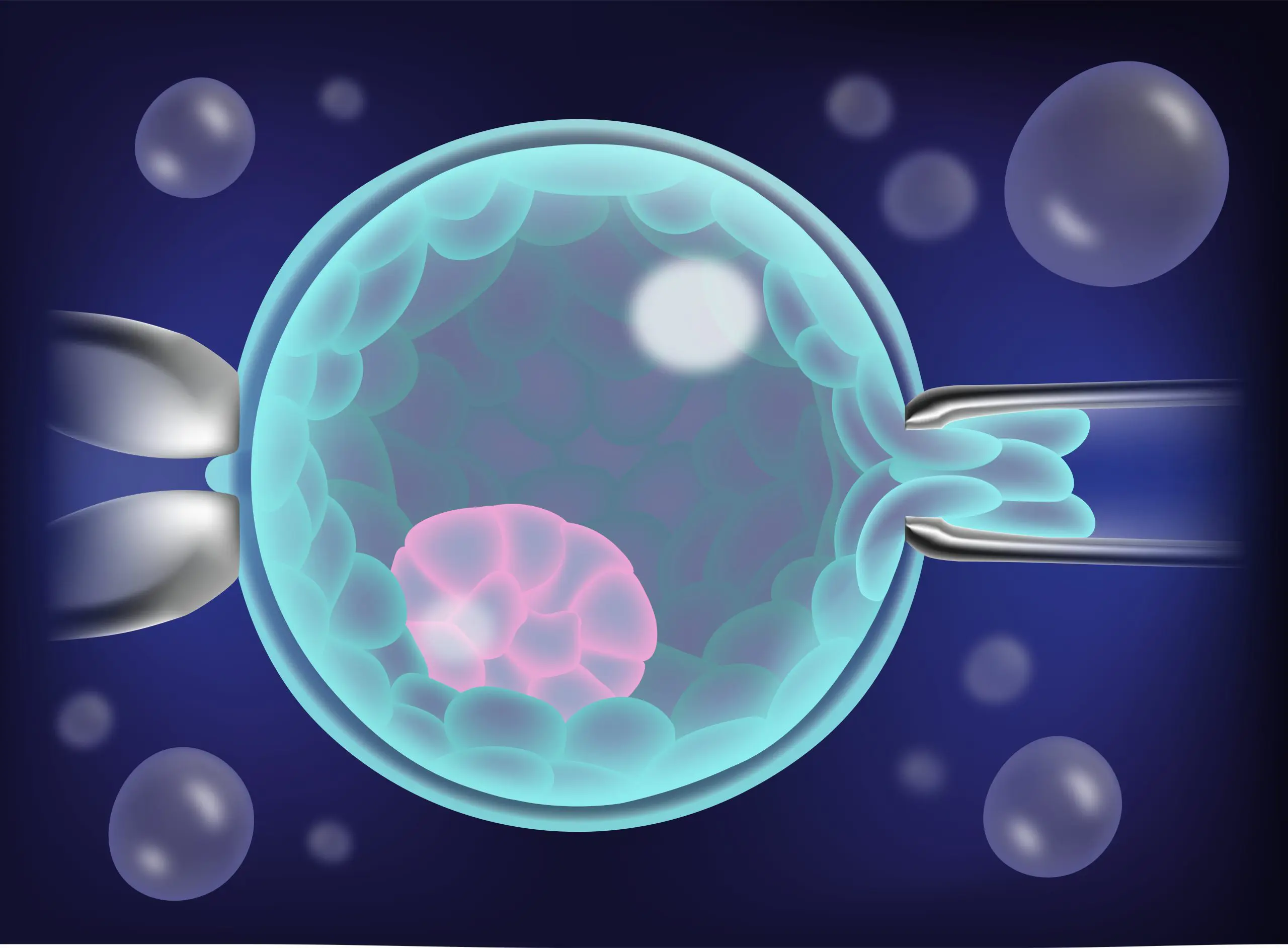
Egg reception, also called egg donation, is an assisted reproduction treatment that makes pregnancy possible when using one’s own eggs isn’t an option.
This treatment uses donated eggs, which are fertilised in the lab with sperm and then transferred into the uterus of the woman who will carry the pregnancy.
It’s a technique based on in vitro fertilisation, with high success rates, and it has helped many women build their family when other options hadn’t worked.

What does the process involve?
Egg donation uses eggs from a donor, which are fertilised in the lab with sperm from the partner or a sperm donor.
Once the embryos form, the one with the best development is transferred into the recipient woman’s uterus to try to achieve pregnancy.
The woman receiving treatment doesn’t provide the eggs, but she does experience the whole pregnancy and gestation.

Situations where this treatment may be considered:
Egg donation may be considered when:
- the woman has a very low ovarian reserve
- her available eggs aren’t good enough quality
- there are genetic conditions that could be passed on
- there have been several unsuccessful IVF attempts
- reproductive age makes it difficult to achieve pregnancy with her own eggs
At the first consultation, we review your tests and medical history to assess whether this option makes sense for you.
Selecting and retrieving the eggs
A donor undergoes ovarian stimulation treatment to obtain several eggs through a follicular puncture. These eggs can be used fresh or after being previously frozen.
Fertilisation in the lab
The donated eggs are fertilised with sperm from the partner or from a sperm donor. The embryos are kept in culture for several days to assess their development.
Preparing the uterus
While the embryos are developing in culture, the recipient woman undergoes hormonal treatment to prepare the endometrium and support embryo implantation.
Embryo transfer
The selected embryo is transferred into the uterus using a thin catheter. It’s a simple procedure that takes just a few minutes and doesn’t require anaesthesia.
Pregnancy test
The test is done via a blood test, approximately 10–12 days after the transfer.
If additional viable embryos remain, they can be frozen for future use.


What to expect afterwards
After the transfer, a waiting period begins until the pregnancy test. During these days, you’ll continue the prescribed hormonal treatment, and it’s recommended you keep life calm and unhurried.
The pregnancy test is a blood test done approximately 10–12 days later.
If the result is positive, a follow-up ultrasound is scheduled to check the pregnancy’s initial progress.
If the result isn’t what you hoped for, our team will review the cycle with you to look at what happened and discuss the options available for your next attempt.

How this treatment is regulated in Spain
medical and legal criteria
- Gamete donation is anonymous by law, so the recipient cannot provide or choose her donor.
- Egg donors must be of legal age, with full legal capacity, and are accepted after completing the legally required screening covering phenotypic traits and genetic, hereditary, infectious and transmissible diseases.
- Choosing the donor is the responsibility of the medical team carrying out the treatment, who must ensure the donor has the closest possible phenotypic and immunological match with the recipient.
- The maximum number of births from a single donor is six.
- If the patient has a spouse, their written consent is required.